As we enter 2026, one theme stands out clearly: AI is no longer optional — it is becoming the engine of global industry transformation.
To launch this series, Apacer President Gibson Chen shares his perspective on the top five technology trends that will define how organizations innovate and compete in the year ahead.
Intelligence Redefines Industry Infrastructure
2026 marks a decisive shift in how industries operate. AI is moving rapidly from isolated pilots to enterprise-wide adoption, while data is generated and processed everywhere — across cloud platforms, edge devices, and connected machines.
This year, intelligent infrastructure becomes the new competitive differentiator. Below are the five trends every organization should watch.
Trend 1 — Hybrid AI Becomes the New Standard of Intelligence — shaping faster, smarter, and more connected decision-making.
AI architectures are evolving toward a hybrid model that blends cloud training, edge inference, and on-device intelligence. This approach ensures the right balance between accuracy and real-time responsiveness.
Impact
- Requires high-speed data movement, including 800G networking and advanced transceivers.
- Modernizes pipelines for real-time inference and faster decision cycles.
- Demands distributed, interoperable infrastructure for consistent performance.
- Reduces latency by combining cloud-level accuracy with edge-level speed.
- Enables more efficient AI operations across diverse environments. Hybrid AI Becomes the New Standard of Intelligence — shaping faster, smarter, and more connected decision-making.
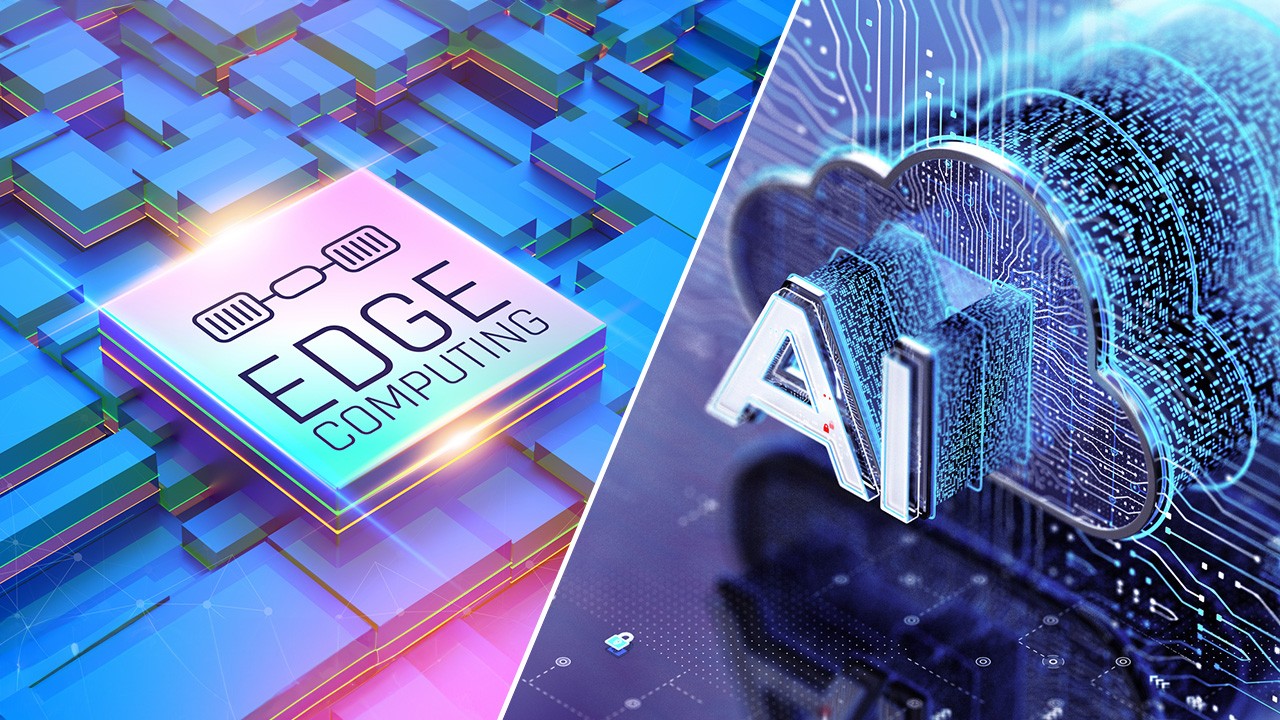
Hybrid AI becomes the new standard of intelligence - shaping faster and smarter decision- making.
|
| |
|
Trend 2 — Enterprise Security Becomes the Foundation of Digital Trust
As AI becomes deeply embedded in business operations, security evolves from a technical issue to a business-continuity priority.
Impact
- Incidents trigger immediate financial loss: downtime, production halts, compliance penalties.
- AI introduces new threats such as data poisoning, model tampering, and compromised sensors.
- Requires end-to-end protection across cloud, edge, and device layers.
- Data integrity becomes essential for trustworthy AI decisions.
- Organizations with strong security earn customer confidence and operational stability.
Trend 3 — Application Innovation Drives Competitive Advantage
AI is shifting from a standalone capability to the backbone of next-generation applications.
Impact
- Automation reduces repetitive work so teams can focus on creativity and strategy.
- Real-time AI insights enhance performance in data-intensive operations.
- Industry-specific apps create new value in AI manufacturing, healthcare, logistics, and retail.
- Custom AI workflows optimize operations based on sector needs.
- Faster application innovation leads directly to productivity and revenue growth.
Trend 4 — Data Integrity Becomes the Core Power Behind Intelligent Operations.
AI is only as reliable as the data behind it. As intelligence becomes more distributed, maintaining trusted, consistent data becomes essential.
Impact
- Ensures predictable AI performance across hybrid and edge environments.
- Minimizes cascading failures in interconnected systems.
- Requires infrastructure built for error-free processing and fast recovery.
- Supports long-term stability of AI-driven operations.
- Becomes a strategic edge for organizations prioritizing uptime and quality.
When intelligence scales, data integrity becomes the backbone of intelligence operation.
|
| |
|
Trend 5 — Sustainability and Efficiency Move to the Center of Technology Strategy
As AI workloads grow, so does the need for energy-efficient, thermally optimized, and sustainable infrastructure.
Impact
- Prioritizes lower-power, thermally efficient technologies.
- Encourages hardware with longer endurance to reduce waste and lifecycle cost.
- ESG requirements increasingly influence procurement decisions.
- Compact, efficient designs support sustainable AI growth.
- Sustainability becomes a global competitive advantage.
Market Signals to Watch
- Leading industry analysts such as IDC note strong momentum behind Edge AI as enterprises push intelligence closer to where data is generated.
- Research from Gartner highlights a continued shift toward processing enterprise data outside traditional centralized data centers, driven by latency, bandwidth, and resilience requirements.
- According to Omdia, the convergence of Edge AI and industrial IoT is expected to remain a key driver of digital and operational transformation over the coming decade.
The Strategic Impact of These Trends
AI thrives only when data is reliable, and edge intelligence succeeds only when infrastructure is resilient. These five trends collectively signal a shift toward intelligent, secure, and distributed systems — where performance, integrity, and sustainability become core competitive advantages. At Apacer, we believe storage is the invisible foundation enabling this transformation, ensuring data accuracy, real-time responsiveness, and long-term operational stability.
Looking Ahead
Organizations that invest early in AI-driven, data-centric infrastructure will lead the next wave of industrial innovation. We invite you to follow the Intelligence in Motion series as we continue exploring the technologies shaping the future of intelligent systems.
Subscribe to the Monthly LinkedIn eNewsletter
