
AI is entering a critical inflection point. Instead of relying solely on centralized cloud platforms, intelligence is increasingly shifting closer to where data is created — the edge. Industry indicators highlight the scale of this shift:
- IDC points to a rapid migration of AI inference toward the edge, driven by latency sensitivity and data gravity.
- Gartner indicates that on-device AI will become a core capability across a growing share of enterprise edge deployments over the next several years.
- McKinsey consistently shows that the majority of AI system cost and complexity lies in data movement and preparation — not raw computation.
In this edition, Apacer President Gibson Chen and Phison CEO K.S. Pua share complementary perspectives on the forces accelerating Edge AI and how they will shape next-generation intelligent infrastructure.
Gibson Chen’s Perspective — The Edge Becomes the New Core of AI
1. Why Edge AI Is Accelerating: Data Is Leaving the Cloud
Across manufacturing, mobility, healthcare, and retail, one reality is becoming clear: data volumes, velocity, and sensitivity are outgrowing cloud-first architectures.
Enterprises increasingly face:
- Data sets too large to continuously backhaul
- Real-time decisions that cannot depend on cloud round trips
- Privacy and data-sovereignty requirements that restrict offloading
IDC projects that by 2030, nearly half of enterprise AI inference workloads will be processed locally—on endpoints and edge nodes—reducing latency, easing cloud traffic, and improving control over sensitive data.
As intelligence moves closer to where data is created, AI must respond in the earliest moments—not after the data travels.
2. Latency Becomes the Defining KPI of AI Performance
AI performance is no longer defined by GPU speed alone—it is increasingly measured by latency and consistency.
In real-world operations:
- A 50-millisecond delay can directly affect industrial safety
- Diagnostic workflows require immediate, on-device inference
- Autonomous systems cannot tolerate unstable connectivity
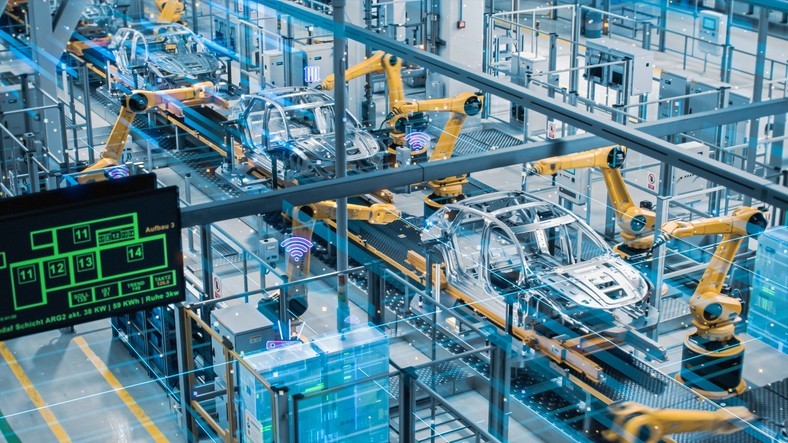
As AI expands into operational environments, enterprises are re-prioritizing infrastructure around real-time processing and edge-native intelligence.
3. The Edge Data Lifecycle Will Reshape Enterprise Architecture
Unlike the cloud, edge environments operate under persistent physical and operational stress:
- Heat, vibration, dust, and shock
- Irregular bursts of sensor data
- On-site retention and regulatory compliance needs
- Continuous write pressure on local storage
- Power instability that can put data at risk
This shifts enterprise focus from where data is processed to how it is handled across its entire lifecycle at the edge.
Key questions emerge:
- How is data captured, filtered, and preserved locally?
- Is data integrity strong enough to support autonomous decisions?
“Data integrity is becoming the foundation of AI reliability.”
K.S. Pua’s Perspective — Why Dataflow Will Define AI’s Next Phase
1. The Bottleneck in Edge AI Is Shifting — From Compute Power to Data Access
For years, AI progress has been closely tied to advances in GPU performance. But as AI systems move from experimental deployments into real-world environments, a different constraint is becoming increasingly visible.
Across enterprise and edge deployments, many edge AI workloads are no longer limited by raw compute capacity, but by:
- Insufficient memory to host large or complex models and handle long token context.
- Inefficient data movement between storage, memory, and processors
- Latency introduced by repeated data loading and re-computation
Industry analysis consistently shows that increasing GPU density alone does not translate into proportional gains in AI efficiency. In many cases, computing resources remain underutilized because data cannot be delivered fast enough or economically enough.
This signals a fundamental shift: AI infrastructure challenges are becoming data-centric rather than compute-centric.
2. Edge AI Exposes the Limits of Traditional Architectures
As AI expands beyond cloud data centers into PCs, industrial systems, medical devices, and on-premise servers, architectural limitations become more pronounced. Edge environments typically face:
- Constrained memory capacity
- Strict power and thermal budgets
- Sensitivity to latency and operating cost
- Regulatory and privacy requirements that limit cloud dependence
Architectures originally designed for centralized data centers struggle to adapt to these conditions. Simply scaling down cloud designs often results in inefficiency, high cost, or compromised performance.

This has driven growing interest in new dataflow-oriented architectures that focus on:
- More flexible memory hierarchies
- Smarter data staging and reuse
- Reduced dependence on constant data movement
- Predictable performance under constrained conditions
Rather than treating storage, memory, and compute as isolated layers, the industry is increasingly viewing them as a single, tightly coupled system.
3. Cloud and Edge Intelligence Are Converging Through Data Efficiency
The evolution of AI infrastructure is not a shift away from the cloud, but a rebalancing of where intelligence is executed.
A clear pattern is emerging:
- More data is processed locally before transmission, so sensitive data remains secure on-premises while selected data is sent to the cloud for further processing.
- Models are becoming more specialized and context-aware
- Data movement is minimized to reduce latency and cost
- Edge and cloud systems operate as complementary components
In this model, efficiency is achieved not by moving more data faster, but by moving less data more intelligently.
This convergence reflects a broader industry realization: scalable AI depends on controlling dataflow as much as increasing compute power.